


ABWEHR SECRET WIRELESS SERVICE.
The Dutch foundation 'Centre for German communication and related technology' produced a paper in 2003 for a symposium at Bornemouth University called: 'Some aspects of the German military Abwehr wireless service during the course of WW-2'. This lecture was put together by Mr. Arthur Bauer with the help of Mr. Rudolf Staritz who was in 1940 posted to the design department of the Abwehr in Berlin-Stahnsdorf. To this paper I added Staritz manuscript tittled 'Abwehrfunk-Funkabwehr. Technik und Verfahren der Spionagefunkdienst'. This is a quite complicated work about the espionage/counterespionage services in Germany during the war.


The Abwehr branch in which Mr. Staritz became involved was officially designated as 'Der geheime Funkmeldedienst des OKW-Amt Ausland', secret military wireless services for operations abroad. The use of the designation OKW, Ober Kommando West , implies that it was officially responsible for all three military organizations i.e. Heer, Marine and Luftwaffe.
The Overseas Radio Center in Wohldorf near Hamburg was, during the Second World War, alongside the radio station in Belzig southwest of Berlin, the second major communications hub for wireless radio of the Amt Ausland/Abwehr (Foreign Office/Intelligence Service) within the Oberkommando der Wehrmacht (OKW – German Armed Forces High Command). It was subordinate to Abwehrstelle X on General-Knochenhauer-Straße, now called Sophienterrasse.
Thanks to the powerful transmitters in Wohldorf, long-distance communications were possible. From Wohldorf, a large part of the shortwave radio traffic with German agents (Agentenfunk – Afu) and other Wehrmacht units overseas, in North and South America, and in the Near and Middle East, was conducted.
In Arcachon, France, on the Atlantic coast, there was a relay station for communications with South America. The radio center played an important role in the occupation of Norway.
The largest German radio station was located in Nauen. The area of its antenna installations exceeded that of the Principality of Monaco. Unlike the Wohldorf station, this facility transmitted in the long-wave and very long-wave ranges, enabling it to reach submerged submarines.
Thanks to the powerful transmitters in Wohldorf, long-distance communications were possible. From Wohldorf, a large part of the shortwave radio traffic with German agents (Agentenfunk – Afu) and other Wehrmacht units overseas, in North and South America, and in the Near and Middle East, was conducted.
In Arcachon, France, on the Atlantic coast, there was a relay station for communications with South America. The radio center played an important role in the occupation of Norway.
The largest German radio station was located in Nauen. The area of its antenna installations exceeded that of the Principality of Monaco. Unlike the Wohldorf station, this facility transmitted in the long-wave and very long-wave ranges, enabling it to reach submerged submarines.
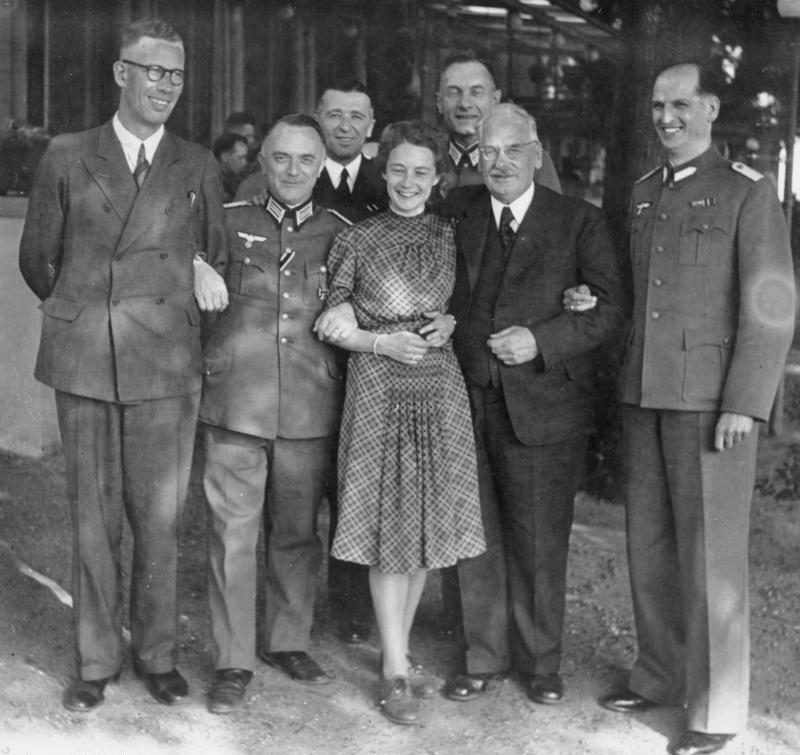
© Bundesarchiv.
Who are these people of the Abwehr wireless service?
Rudolf Staritz, born in 1921, is probably the last living eyewitness who, in 1941/42, worked as a radio operator and in equipment design at the OKW (Armed Forces High Command) branch office in Stahnsdorf, and who, thanks to his exceptional memory, can still give vivid and detailed accounts of that time. His stories, told in several conversations with the author during 2018/19 and supplemented by the author’s own research, form the basis of this report, which is intended as a supplement to Rudolf Staritz’s manuscript “Abwehrfunk – Funkabwehr.”
Today’s “Stahnsdorf Complex,” owned by Green Park GmbH and located at Ruhlsdorfer Straße 95, lies roughly halfway between Stahnsdorf and Ruhlsdorf, south of Berlin. In 1938, the site was merely a small wooded area, where the “Amtsgruppe Auslandsnachrichten und Abwehr” (Foreign Intelligence and Counterintelligence Department) began construction of a radio center under the cover name “Heeresneubauamt” (“Army Construction Office”), which was occupied in May 1939.
The office, also known as the “OKW Branch Office Stahnsdorf” (Abwehr internal code name “Schloß”), belonged to Department Ii “Secret Radio Communication Service,” which was responsible for establishing and operating the internal Abwehr radio networks, the agent radio networks, and for providing the necessary radio technology, particularly the development and production of agent radio (Afu) devices.
As the technically superior office and “parent institution” for all radio operators employed in the Abwehr’s Secret Radio Communication Service, Department Ii also included the corresponding training facilities in Krugsdorf (later Striegau) and in Neuhof, as well as the new radio headquarters near Belzig/Mark, which was occupied in 1942.
Today’s “Stahnsdorf Complex,” owned by Green Park GmbH and located at Ruhlsdorfer Straße 95, lies roughly halfway between Stahnsdorf and Ruhlsdorf, south of Berlin. In 1938, the site was merely a small wooded area, where the “Amtsgruppe Auslandsnachrichten und Abwehr” (Foreign Intelligence and Counterintelligence Department) began construction of a radio center under the cover name “Heeresneubauamt” (“Army Construction Office”), which was occupied in May 1939.
The office, also known as the “OKW Branch Office Stahnsdorf” (Abwehr internal code name “Schloß”), belonged to Department Ii “Secret Radio Communication Service,” which was responsible for establishing and operating the internal Abwehr radio networks, the agent radio networks, and for providing the necessary radio technology, particularly the development and production of agent radio (Afu) devices.
As the technically superior office and “parent institution” for all radio operators employed in the Abwehr’s Secret Radio Communication Service, Department Ii also included the corresponding training facilities in Krugsdorf (later Striegau) and in Neuhof, as well as the new radio headquarters near Belzig/Mark, which was occupied in 1942.


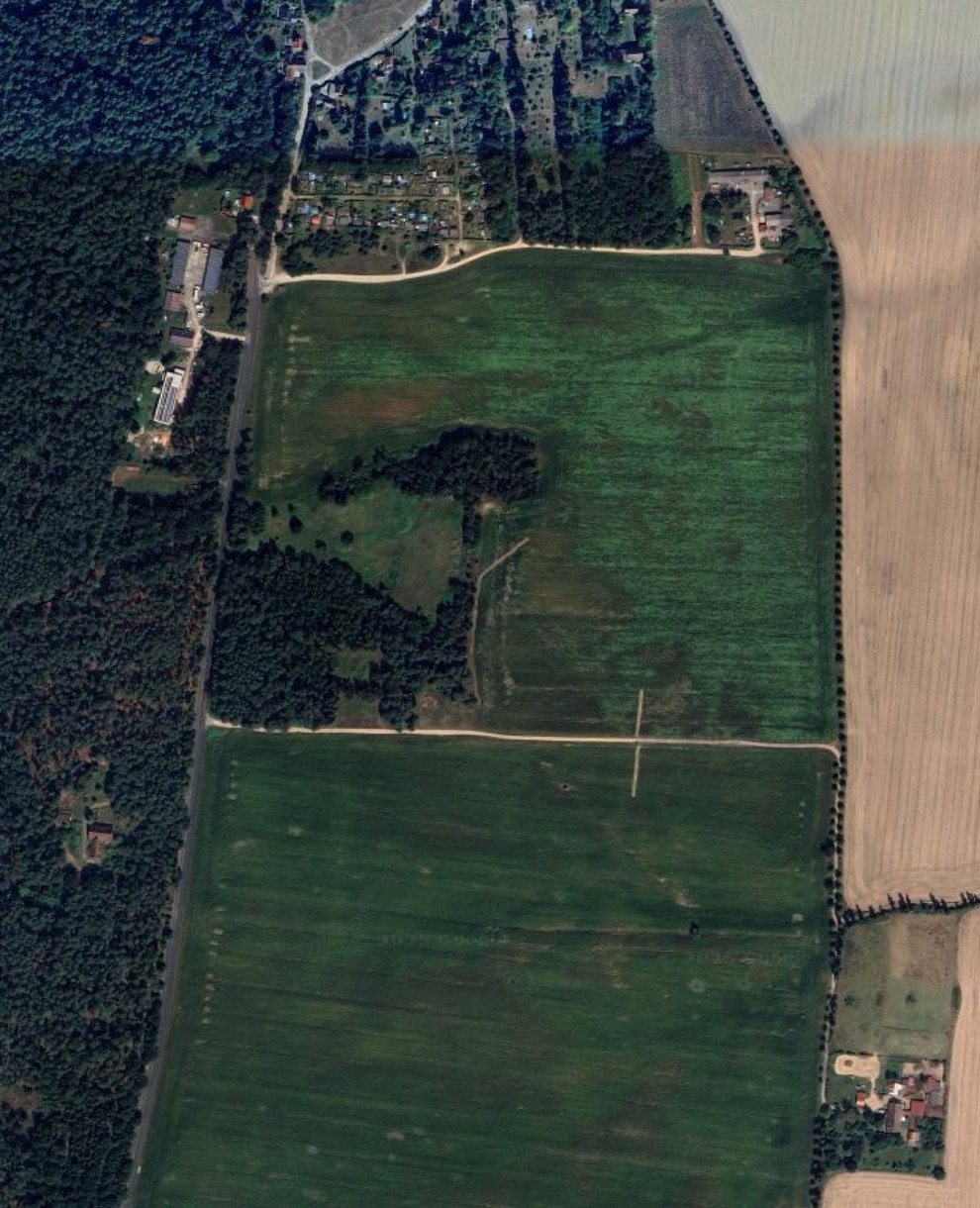






Belzig II Belzig I Transmitter location

© cdvandt.org
Abwehr station Wohldorf.

House 'Kupferhof'


In the Wohldorf district in the northeast of Hamburg, there is a building with an interesting history — the Kupferhof. The new Kupferhof was built in 1912 by two merchant families from Hamburg. In 1938, the German Wehrmacht purchased the building at auction and operated a radio communications station there for counter-espionage. Its main task was to maintain contact with German spies abroad.
After the war, the villa initially served as a military hospital. Since 1949, it has been home to the central training center of the Free and Hanseatic City of Hamburg (Administrative Seminar Kupferhof).
One of the roads leading to the Kupferhof was closed off at the time (and remains so today). Along the old cobblestone road through the forest there are even street lamps — although they were probably installed only after the war.
Insertion of the Secret Radio Intelligence Service and the Radio Counterintelligence Service into the Intelligence and Security Organizations
The intelligence organizations responsible for obtaining political, economic, and military information, as well as for countering enemy reconnaissance operations, employed several thousand personnel before the Second World War (and today, the major powers employ several hundred thousand).
The worldwide deployment of resident agents and intelligence gatherers required a secure and fast communication network. Before the war, the vulnerable radio channels were avoided whenever possible, with preference given to personal or postal courier routes, and within their own sphere of control, the use of military-secured wired communication networks. Own wire and directional radio connections were also used during the war whenever possible; however, over long distances, across war fronts, and generally in mobile warfare, reliance on radio communication became necessary. This led, in the course of the Second World War, to the creation of extensive radio networks.
Between the intelligence-gathering field agents and radio operators at the front and the intelligence-analysis centers in the rear, there existed a multi-layered organization equipped with a wide range of devices and installations — from small and miniature radio sets to radio centers whose scale rivaled that of large coastal, overseas, or other commercial radio stations.
Accordingly, the radio technology employed was extremely diverse, encompassing a variety of specially developed or commercially available (mostly civilian) devices — from amateur radio constructions to the sophisticated "equipment parks" of general staffs and postal administrations.
In the area of secret intelligence service (espionage), this refers to the transmission of information using radio technology, known within the then German sphere of control as the Secret Radio Intelligence Service (Geheimer Funkmeldedienst).
In the area of counter-espionage and counterintelligence, this included the so-called radio counterintelligence service (Funkabwehr) and technical infiltration of enemy intelligence services through “radio games” (Funkspiele).
Both branches of service underwent numerous changes in structure, organization, and subordination within the German intelligence system, which can be briefly illustrated through the development of the German military intelligence service from the First World War to the end of the Second World War.
Organization of German Military Counterintelligence from the First World War to the End of the Second World War
Until the End of the First World War
Chief of the Intelligence Service / Supreme Army Command Section III b (Colonel Nicolai):
Intelligence officers who simultaneously served as heads of the intelligence service at the Army Group Commands and the commands of allied armies.
Autumn 1919
Intelligence and reconnaissance service within the emerging Reichswehr and the Freikorps: Counterintelligence offices (Abwehrstellen) established at the military district commands and Reichswehr brigades (for the “defense” against political-revolutionary influences).
Summer 1920
Abwehr Group in the Reichswehr Ministry (Major Gempp), initially with purely defensive tasks against espionage and sabotage: Section East and Section West.
1921
Abwehr Group T-3 Abw of the Army Statistical Department T-3 within the Troop Office (Truppenamt, the disguised General Staff): Subgroup I: Reconnaissance, Subgroup II: Cipher and radio monitoring service, Subgroup III: Counterespionage. In total: 7 Abwehrstellen (counterintelligence offices) in the military districts.
March 30, 1928
Abwehr Department of the Reichswehr Ministry and merger with the previously separate Naval Intelligence Service.
Chief until June 1927: Colonel Gempp; thereafter Colonel Schwantes.
End of 1929
Colonel von Bredow; June 1932: Captain (Navy) Patzig; January 1935: Captain (Navy) Canaris.
Suborganization as above.
1938
Office Group “Foreign Intelligence and Counterintelligence” within the Armed Forces High Command (OKW):
Subgroup I: Secret Intelligence Service, Subgroup II: Sabotage and Subversion, Subgroup III: Counterespionage.
October 18, 1939
Office “Foreign Affairs/Counterintelligence” (Amt Ausland/Abwehr) of the OKW (Admiral Canaris):
Office Group Foreign Affairs
Department Z: Organization and Administration
Department I: Secret Intelligence Service
Department II: Sabotage and Subversion
Department III: Counterespionage and Counterintelligence
Including:
Stationary Abwehrstellen (within the Reich and occupied territories)
Stationary Kriegsorganisationen (war organizations) in neutral countries
Mobile front intelligence units attached to the Army Group and Army High Commands
June 1, 1944.
Division of the OKW Amt Ausland/Abwehr between the Reich Main Security Office (RSHA) and the Wehrmacht to create a “unified German Secret Intelligence Service”:
RSHA Office Mil.: Departments Z, I, and II of the military intelligence service
RSHA Office VI: Consolidation of all political intelligence and counterespionage abroad
RSHA Office IV: Consolidation of all domestic and occupied-territory counterespionage services
OKW/WFSt: Office Group Foreign Affairs and troop counterintelligence from Abwehr Department III
OKH/FHW: Front Reconnaissance Units I West
OB West/Ic: Front Reconnaissance Units II and III West
OKH/FHO: Front Reconnaissance Units I East
OKH/Army Administration Department: Front Reconnaissance Units II and III East.
In Germany, as abroad, the traditional military — before the flying units became an independent Luftwaffe, knew only the two branches of service: Heer and Marine. Both had largely separate areas of responsibility, their own intelligence or secret reporting services, and only little cooperation at the general staff level was necessary between them.
The tasks of the Army primarily included reconnaissance of neighboring countries, while the Navy, with much greater reconnaissance distances, had to conduct intelligence operations in more distant countries and ports, and against foreign fleets operating far away.
After the lost First World War, the provisions of the Treaty of Versailles prohibited any intelligence activity by the remaining Reichswehr. Since its own reconnaissance and espionage were therefore initially impossible, it was at least necessary and desirable to counter foreign espionage. For this purpose — and with a clear and accurate designation — the Abwehr Group was created in 1920 within the Reichswehr Ministry, becoming the Abwehr Department in 1928. Initially tasked purely with counterintelligence duties, as early as 1921, covert subgroups for reconnaissance (that is, espionage) and for cipher and radio monitoring services were established alongside counterespionage.
The Naval Intelligence Service remained independent until 1928, about the time when the military’s communications network increasingly adopted long-range shortwave radio technology, which also led, for this reason, to a more integrated military command with comprehensive communication networks.
The responsibilities of the cipher and radio monitoring services were transferred in 1938 to other organizations within the OKW (Oberkommando der Wehrmacht, or High Command of the Armed Forces), while Department II took on new areas of responsibility: sabotage and subversion.
Military-organized elements of the Abwehr were also subordinated to this new Department II. These included the units z.b.V. 800, the later famous Brandenburgers, and later the Regiment z.b.V. 1001 Kurfürst, which served as a replacement unit for agents and informants.
In 1938, the Abwehr was reorganized into a group within the ministry, and in October 1939, shortly after the beginning of the Second World War, it was elevated to the status of an independent Office for Foreign Affairs/Abwehr within the OKW (hereafter referred to simply as the “Abwehr”). The structure of the Abwehr remained largely unchanged until mid-1944, when the Office for Foreign Affairs/Abwehr was dissolved by Führer order to create a unified German secret intelligence service and was divided between the Reich Security Main Office (RSHA) of the SS and the Wehrmacht.
With the creation of the unified German secret intelligence service, new designations were also introduced, but these did not gain acceptance within the Wehrmacht, there, the established terms Front Intelligence Control Centers (Frontaufklärungsleitstellen, FAL), Front Intelligence Commands (Frontaufklärungskommandos, FAK), and Front Intelligence Troops (Frontaufklärungstrupps, FAT) continued to be used until the end of the war.
After the war, the villa initially served as a military hospital. Since 1949, it has been home to the central training center of the Free and Hanseatic City of Hamburg (Administrative Seminar Kupferhof).
One of the roads leading to the Kupferhof was closed off at the time (and remains so today). Along the old cobblestone road through the forest there are even street lamps — although they were probably installed only after the war.
Insertion of the Secret Radio Intelligence Service and the Radio Counterintelligence Service into the Intelligence and Security Organizations
The intelligence organizations responsible for obtaining political, economic, and military information, as well as for countering enemy reconnaissance operations, employed several thousand personnel before the Second World War (and today, the major powers employ several hundred thousand).
The worldwide deployment of resident agents and intelligence gatherers required a secure and fast communication network. Before the war, the vulnerable radio channels were avoided whenever possible, with preference given to personal or postal courier routes, and within their own sphere of control, the use of military-secured wired communication networks. Own wire and directional radio connections were also used during the war whenever possible; however, over long distances, across war fronts, and generally in mobile warfare, reliance on radio communication became necessary. This led, in the course of the Second World War, to the creation of extensive radio networks.
Between the intelligence-gathering field agents and radio operators at the front and the intelligence-analysis centers in the rear, there existed a multi-layered organization equipped with a wide range of devices and installations — from small and miniature radio sets to radio centers whose scale rivaled that of large coastal, overseas, or other commercial radio stations.
Accordingly, the radio technology employed was extremely diverse, encompassing a variety of specially developed or commercially available (mostly civilian) devices — from amateur radio constructions to the sophisticated "equipment parks" of general staffs and postal administrations.
In the area of secret intelligence service (espionage), this refers to the transmission of information using radio technology, known within the then German sphere of control as the Secret Radio Intelligence Service (Geheimer Funkmeldedienst).
In the area of counter-espionage and counterintelligence, this included the so-called radio counterintelligence service (Funkabwehr) and technical infiltration of enemy intelligence services through “radio games” (Funkspiele).
Both branches of service underwent numerous changes in structure, organization, and subordination within the German intelligence system, which can be briefly illustrated through the development of the German military intelligence service from the First World War to the end of the Second World War.
Organization of German Military Counterintelligence from the First World War to the End of the Second World War
Until the End of the First World War
Chief of the Intelligence Service / Supreme Army Command Section III b (Colonel Nicolai):
Intelligence officers who simultaneously served as heads of the intelligence service at the Army Group Commands and the commands of allied armies.
Autumn 1919
Intelligence and reconnaissance service within the emerging Reichswehr and the Freikorps: Counterintelligence offices (Abwehrstellen) established at the military district commands and Reichswehr brigades (for the “defense” against political-revolutionary influences).
Summer 1920
Abwehr Group in the Reichswehr Ministry (Major Gempp), initially with purely defensive tasks against espionage and sabotage: Section East and Section West.
1921
Abwehr Group T-3 Abw of the Army Statistical Department T-3 within the Troop Office (Truppenamt, the disguised General Staff): Subgroup I: Reconnaissance, Subgroup II: Cipher and radio monitoring service, Subgroup III: Counterespionage. In total: 7 Abwehrstellen (counterintelligence offices) in the military districts.
March 30, 1928
Abwehr Department of the Reichswehr Ministry and merger with the previously separate Naval Intelligence Service.
Chief until June 1927: Colonel Gempp; thereafter Colonel Schwantes.
End of 1929
Colonel von Bredow; June 1932: Captain (Navy) Patzig; January 1935: Captain (Navy) Canaris.
Suborganization as above.
1938
Office Group “Foreign Intelligence and Counterintelligence” within the Armed Forces High Command (OKW):
Subgroup I: Secret Intelligence Service, Subgroup II: Sabotage and Subversion, Subgroup III: Counterespionage.
October 18, 1939
Office “Foreign Affairs/Counterintelligence” (Amt Ausland/Abwehr) of the OKW (Admiral Canaris):
Office Group Foreign Affairs
Department Z: Organization and Administration
Department I: Secret Intelligence Service
Department II: Sabotage and Subversion
Department III: Counterespionage and Counterintelligence
Including:
Stationary Abwehrstellen (within the Reich and occupied territories)
Stationary Kriegsorganisationen (war organizations) in neutral countries
Mobile front intelligence units attached to the Army Group and Army High Commands
June 1, 1944.
Division of the OKW Amt Ausland/Abwehr between the Reich Main Security Office (RSHA) and the Wehrmacht to create a “unified German Secret Intelligence Service”:
RSHA Office Mil.: Departments Z, I, and II of the military intelligence service
RSHA Office VI: Consolidation of all political intelligence and counterespionage abroad
RSHA Office IV: Consolidation of all domestic and occupied-territory counterespionage services
OKW/WFSt: Office Group Foreign Affairs and troop counterintelligence from Abwehr Department III
OKH/FHW: Front Reconnaissance Units I West
OB West/Ic: Front Reconnaissance Units II and III West
OKH/FHO: Front Reconnaissance Units I East
OKH/Army Administration Department: Front Reconnaissance Units II and III East.
In Germany, as abroad, the traditional military — before the flying units became an independent Luftwaffe, knew only the two branches of service: Heer and Marine. Both had largely separate areas of responsibility, their own intelligence or secret reporting services, and only little cooperation at the general staff level was necessary between them.
The tasks of the Army primarily included reconnaissance of neighboring countries, while the Navy, with much greater reconnaissance distances, had to conduct intelligence operations in more distant countries and ports, and against foreign fleets operating far away.
After the lost First World War, the provisions of the Treaty of Versailles prohibited any intelligence activity by the remaining Reichswehr. Since its own reconnaissance and espionage were therefore initially impossible, it was at least necessary and desirable to counter foreign espionage. For this purpose — and with a clear and accurate designation — the Abwehr Group was created in 1920 within the Reichswehr Ministry, becoming the Abwehr Department in 1928. Initially tasked purely with counterintelligence duties, as early as 1921, covert subgroups for reconnaissance (that is, espionage) and for cipher and radio monitoring services were established alongside counterespionage.
The Naval Intelligence Service remained independent until 1928, about the time when the military’s communications network increasingly adopted long-range shortwave radio technology, which also led, for this reason, to a more integrated military command with comprehensive communication networks.
The responsibilities of the cipher and radio monitoring services were transferred in 1938 to other organizations within the OKW (Oberkommando der Wehrmacht, or High Command of the Armed Forces), while Department II took on new areas of responsibility: sabotage and subversion.
Military-organized elements of the Abwehr were also subordinated to this new Department II. These included the units z.b.V. 800, the later famous Brandenburgers, and later the Regiment z.b.V. 1001 Kurfürst, which served as a replacement unit for agents and informants.
In 1938, the Abwehr was reorganized into a group within the ministry, and in October 1939, shortly after the beginning of the Second World War, it was elevated to the status of an independent Office for Foreign Affairs/Abwehr within the OKW (hereafter referred to simply as the “Abwehr”). The structure of the Abwehr remained largely unchanged until mid-1944, when the Office for Foreign Affairs/Abwehr was dissolved by Führer order to create a unified German secret intelligence service and was divided between the Reich Security Main Office (RSHA) of the SS and the Wehrmacht.
With the creation of the unified German secret intelligence service, new designations were also introduced, but these did not gain acceptance within the Wehrmacht, there, the established terms Front Intelligence Control Centers (Frontaufklärungsleitstellen, FAL), Front Intelligence Commands (Frontaufklärungskommandos, FAK), and Front Intelligence Troops (Frontaufklärungstrupps, FAT) continued to be used until the end of the war.
STATIONS.




transmitters receivers
'Vorwerk' 'Domäne'
'Vorwerk' 'Domäne'



















































Intelligence stations in Germany:
Köningsberg, Abwehrstation I.
Stettin, Abwehrstation II.
Berlin, Abwehrstations III & XVI.
Dresden, Abwehstation IV.
Stuttgart, Abwehrstation V.
Münster, Abwehrstation VI 'Meisheide'.
München, Abwehrstation VII.
Breslau, Abwehrstation VIII.
Kassel, Abwehrstation IX.
Hamburg, Abwehrstation X.
Hannover, Abwehrstation XI.
Wiesbaden, Abwehrstation XII 'Eiserne Hand'.
Nürnberg, Abwehrstation XIII.
Magdeburg, Abwehrstation XIV.
Jena, Abwehrstation XV.
Wien, Abwehrstation XVII.
Salzburg, Abwehrstation XVIII.
In occupied countries:
France: Paris (Intelligence Main Station), Angers, Dijon, Lille, St. Germain, Strassburg.
Belgium: Brussel.
Holland: Den Haag.
Denmark: Kopenhagen.
Norway: Oslo, 'Otto'.
Estland: Riga.
Russia: Ukrain.
Poland: Warsaw.
In neutral countries:
Turkey: Ankarra.
Switzerland: Bern.
Argentina: Buenos Aires.
Romania: Bucharest.
Finland: Helsinki.
Portugal: Lissabon, 'Lisa'.
Spain: Madrid, 'Sabine'.
China: Shanghai.
Bulgaria: Sofia.
Sweden: Stockholm.
In particular, the Abwehr offices in the military districts near the border were, before the beginning of the war, responsible, among other things, for the operational deployment of agents in neighboring countries and in seaports.
Ensuring the connection between the Abwehr (German military intelligence) and the agents was the task of the reporting units (Meldestaffeln), whose reporting centers (Meldeköpfe) represented the actual interface with the agents on site.
If these agents were equipped with special radio transmitters (known as Afu devices), they were referred to as radio agents or agent radio operators (both terms were used synonymously) and were therefore connected with a radio reporting center.
In addition to agents who worked even during peacetime to gather military, political, and economic intelligence, so-called S-agents (tension agents) and SR-agents (traveling tension agents) were deployed in preparation for states of tension or war.
In the event of retreats during the war, R-agents (stay-behind agents) were to operate in the now enemy-controlled territory after being overrun by the front lines.
During the war, these long-term prepared missions were joined by countless parachute agents deployed by all the warring sides.
For military operations, secret intelligence gathered by agents and informants (V-Leute) was only one of several sources.
Aerial reconnaissance, radio interception, interrogation of prisoners, and armed reconnaissance at the front were other sources.
All of this intelligence material was to be made available as quickly as possible to the Ic (intelligence) sections of the directly affected units, as well as to the higher-level general and admiral staff departments, Foreign Armies East (Fremde Heere Ost), Foreign Armies West (Fremde Heere West), Foreign Air Forces (Fremde Luftwaffen), and Foreign Navies (Fremde Marinen), where the actual analysis of the various reports took place.
Conversely, the analysis results were to be shared with their own troops, and agent control had to be maintained, requiring rapid communication in both directions.
Where wired communications were unavailable, the extensive Abwehr radio network was used for this purpose.
Köningsberg, Abwehrstation I.
Stettin, Abwehrstation II.
Berlin, Abwehrstations III & XVI.
Dresden, Abwehstation IV.
Stuttgart, Abwehrstation V.
Münster, Abwehrstation VI 'Meisheide'.
München, Abwehrstation VII.
Breslau, Abwehrstation VIII.
Kassel, Abwehrstation IX.
Hamburg, Abwehrstation X.
Hannover, Abwehrstation XI.
Wiesbaden, Abwehrstation XII 'Eiserne Hand'.
Nürnberg, Abwehrstation XIII.
Magdeburg, Abwehrstation XIV.
Jena, Abwehrstation XV.
Wien, Abwehrstation XVII.
Salzburg, Abwehrstation XVIII.
In occupied countries:
France: Paris (Intelligence Main Station), Angers, Dijon, Lille, St. Germain, Strassburg.
Belgium: Brussel.
Holland: Den Haag.
Denmark: Kopenhagen.
Norway: Oslo, 'Otto'.
Estland: Riga.
Russia: Ukrain.
Poland: Warsaw.
In neutral countries:
Turkey: Ankarra.
Switzerland: Bern.
Argentina: Buenos Aires.
Romania: Bucharest.
Finland: Helsinki.
Portugal: Lissabon, 'Lisa'.
Spain: Madrid, 'Sabine'.
China: Shanghai.
Bulgaria: Sofia.
Sweden: Stockholm.
In particular, the Abwehr offices in the military districts near the border were, before the beginning of the war, responsible, among other things, for the operational deployment of agents in neighboring countries and in seaports.
Ensuring the connection between the Abwehr (German military intelligence) and the agents was the task of the reporting units (Meldestaffeln), whose reporting centers (Meldeköpfe) represented the actual interface with the agents on site.
If these agents were equipped with special radio transmitters (known as Afu devices), they were referred to as radio agents or agent radio operators (both terms were used synonymously) and were therefore connected with a radio reporting center.
In addition to agents who worked even during peacetime to gather military, political, and economic intelligence, so-called S-agents (tension agents) and SR-agents (traveling tension agents) were deployed in preparation for states of tension or war.
In the event of retreats during the war, R-agents (stay-behind agents) were to operate in the now enemy-controlled territory after being overrun by the front lines.
During the war, these long-term prepared missions were joined by countless parachute agents deployed by all the warring sides.
For military operations, secret intelligence gathered by agents and informants (V-Leute) was only one of several sources.
Aerial reconnaissance, radio interception, interrogation of prisoners, and armed reconnaissance at the front were other sources.
All of this intelligence material was to be made available as quickly as possible to the Ic (intelligence) sections of the directly affected units, as well as to the higher-level general and admiral staff departments, Foreign Armies East (Fremde Heere Ost), Foreign Armies West (Fremde Heere West), Foreign Air Forces (Fremde Luftwaffen), and Foreign Navies (Fremde Marinen), where the actual analysis of the various reports took place.
Conversely, the analysis results were to be shared with their own troops, and agent control had to be maintained, requiring rapid communication in both directions.
Where wired communications were unavailable, the extensive Abwehr radio network was used for this purpose.
Figure 1.
weggum.com
(deel 1)