CAMP 020
INTERIM REPORT
ON THE CASE OF HERMANN GISKES
INTERIM REPORT
ON THE CASE OF HERMANN GISKES
AST NIEDERLANDE.
GISKES was transferred to AST Niederlande in August 1941 and appointed Leiter III-F with the rank of Lt. Colonel. He found that he was responsible, for adminstration purposes, to the Leiter of the AST who was a member of the staff of the Wehrmachtsbefehlshaber Holland but, for purely Abwehr matters, he was to deal with his friend ROHLEDER of Abwehr Amt. III.
GISKES was transferred to AST Niederlande in August 1941 and appointed Leiter III-F with the rank of Lt. Colonel. He found that he was responsible, for adminstration purposes, to the Leiter of the AST who was a member of the staff of the Wehrmachtsbefehlshaber Holland but, for purely Abwehr matters, he was to deal with his friend ROHLEDER of Abwehr Amt. III.

Joachim Rohleder (* 29 April 1892 in Stettin; † 5 December 1973 in Taunus)
The larger part of his time in Holland until April 1944, when he was given command of FAK 307, was devoted to the "NORDPOL" affair which is the subject of a special report, but a brief account is given below of the activities of interest during this period:
COASTAL NET.
On arrival GISKES, who had heard in Paris of the constant sea operations between the UK and France, discovered that there was no organised information service operating on the Dutch coast and charged one of his assistants, Hptm. BUSSE, with the organisation of such a service: he declares that although a good organisation was set up, no positive results were obtained.
SPANISH REITER.
This was the code name given to the investigation of infiltration and escape lines between Holland, Brussels and the Swiss frontier. The investigation was carried out by Major KIESEWETTER assisted by BODENS and HAGEMANN and it was discovered that the organiser was the Dutch Consul in Berne, a certain VAN TRICHT; in addition a number of safe houses on the Belgian-Dutch frontier were uncovered and the occupants arrested.
HANNIBAL.
This was the cover name given to the investigation of an ecfiltration organisation on the Dutch-German frontier. The enquiry was carried out by AST Wilhelmshafen since N-Holland as far south as the Zuyder Zee, together with the hinterland, was a Wilhelmshafen sphere; this arrangement lead to endless difficulties but continued as long as GISKES was in Holland. A certain DutchmanHOSEMANNS, a V-Mann of Wilhelmshafen, who had been dismissed from AST Niederlande by GISKES for malpractice and blackmail of his own nationals took a leading part in this investigation. GISKES cannot remember the outcome of the enquiry.
LOCATIONS OF REFERAT III-F NIEDERLANDE.
August 1941 - May 1942, Hogeweg 6, Scheveningen.
May 1942 - November 1942, Am Plein, The Hague.
November 1942 - March 1944, Hoogestraat, Driebergen (Hoofdweg 57, Driebergen).
COASTAL NET.
On arrival GISKES, who had heard in Paris of the constant sea operations between the UK and France, discovered that there was no organised information service operating on the Dutch coast and charged one of his assistants, Hptm. BUSSE, with the organisation of such a service: he declares that although a good organisation was set up, no positive results were obtained.
SPANISH REITER.
This was the code name given to the investigation of infiltration and escape lines between Holland, Brussels and the Swiss frontier. The investigation was carried out by Major KIESEWETTER assisted by BODENS and HAGEMANN and it was discovered that the organiser was the Dutch Consul in Berne, a certain VAN TRICHT; in addition a number of safe houses on the Belgian-Dutch frontier were uncovered and the occupants arrested.
HANNIBAL.
This was the cover name given to the investigation of an ecfiltration organisation on the Dutch-German frontier. The enquiry was carried out by AST Wilhelmshafen since N-Holland as far south as the Zuyder Zee, together with the hinterland, was a Wilhelmshafen sphere; this arrangement lead to endless difficulties but continued as long as GISKES was in Holland. A certain DutchmanHOSEMANNS, a V-Mann of Wilhelmshafen, who had been dismissed from AST Niederlande by GISKES for malpractice and blackmail of his own nationals took a leading part in this investigation. GISKES cannot remember the outcome of the enquiry.
LOCATIONS OF REFERAT III-F NIEDERLANDE.
August 1941 - May 1942, Hogeweg 6, Scheveningen.
May 1942 - November 1942, Am Plein, The Hague.
November 1942 - March 1944, Hoogestraat, Driebergen (Hoofdweg 57, Driebergen).

Abwehr III-F, Hogeweg 6, Scheveningen.

Abwehr III-F, Beukenstein, Hoofdweg 57, Driebergen.
FORMATION OF FAK AND FAT.
In the winter of 1943/1944 the situation in France and Belgium and, to a certain extent, Holland had deterioriated and it became obvious to ABwehr Amt. III that an intensification of effort would be necessary as it was known:
a. That the organisation and arming of Resistance from the UK was proceeding rapidly.
b. That clandestine transmitters were on the increase.
c. That enemy espionage had become more efficient and was producing good results.
On the other hand the Oberkommando West felt that, under the existing arrangements, it was unable to combat these threats to military security in view of:
a.
The lack of trained personnel.
b.
The increasing readiness of the civilian population to co-operate with the Allies - a readiness which, it was felt, would increase as the date of the Allied invasion of the Continent drew near.
c.
The mistrust felt by the RSHA of the Abwehr and of all officers who were not members of the NSDAP, which resulted in the RSHA continually trying to encroach on military security.
In view of this situation it was decided by Abwehr Amt. III that it was necessary to withdraw all III-F personnel from the various Referats and form FAK's and FAT's. directly under the Leitstelle III West and the relevant Army HQ, thus ensuring a very much more direct liaison with the military side and also strengthening the Abwehr's hand in its struggle against the RSHA.
FAK 307.
In January 1944 GISKES was appointed to the command of FAK 307 with FATs 362, 363, 364 and 365 under command. For the next three months GISKES was busy with the formation of his command and also carrying on his routine work in Holland during the transitional stage. He was constantly travelling between Driebergen where Referat III-F Niederlande was making ready to hand over and Brussels, Place de l'Industrie, where FAK 307 was forming. He had constant difficulties owing to a lack of personnel, as it was now necessary to finf officers and men who had military, as well as Abwehr, experience - this last was a matter of some importance as it was essential to make a good impression on the staffs of the formations to which his units were to be ultimately attached. In Addition, M/T, field telephones, WT equipment, etc were in short supply and GISKES had to use a considerable amount of ingenuity in getting the stores that were alloted to his units on the estanlishment. It had been made clear to him by Leitstelle III West that the units under his command might have to operate as ordinary military reconnaissance Trupps, working in uniform, thus making it necessary to train them for these duties. (On several occasions between September 1944 and April 1945 normal 1(a) reconnaissances were made by the Trupps for identification purposes).
Finally however preparations were so advanced that he could open in Brussels and close his HQ in Driebergen (A villa owned by Jewish people!) and in early March the new structure came into operation, although none of the units ever received the personnel and equipment laid down on the establishment.
GISKES FUNCTIONS.
The area alloted to FAK 307 and units under commant streched from the south bank of the Ems to the mouth of the Seine, comprising Holland, Belgium and the French departments of the Nord and Pas de Calais. GISKES was responsible for the keeping the I(c) branches of the C.i.C. Wehrmacht Holland and the C.i.C. Belgium and North France informed of the III-F position in this area; in addition he was to a certain extent under the Leitstelle III West but GISKES says that, in practice. he was really subordinate to the I(c) branches of the relevant Army HQ's.
GISKES states that from March onwards he practically ceased to be a technical Abwehr officer, his duties consisting of administering his unit and attending endless staff conferences in the capacity of a C.E. expert. (His duties appear to have approximated to those of a G.S.O.2.I(b) at an Army HQ with units under command.
ARMY's ATTITUDE TOWARDS RESISTANCE.
GISKES found that the static HQ in Holland and Belgium were completely unaware of the potential dangers of Resistance in the event of an invasion. The I(c) staffs consisted chiefly of elderly reserve officers who could not conceive of a war in terms of Resistance behind their own lines and regarded GISKES as an alarmist whose ideas would only cause extra work. GISKES himself was convinced of the very real danger.
A a leter period however, after September 1944, when GISKES was working with Heeresgruppe I(c) he found that the regular officers at this HQ were very much under the influence of the successes achieved by Resistance in France and Belgium - so much so in fact, that they tended to exaggerate the potential danger of foreign workers and POWs in Germany and were continually asking for investigation of the wildest rumours about Resistance groups. GISKES himself now thinks that the Resistance movements in France and Belgium played a large part in the defeat of the German Armies in the West but that there is no reason to believe that organised resistance existed behind the lines in Germany, at least not in the sector Heeresgruppe B. There may have been locally formed groups which however achieved nothing of importance.
FAK ACTIVITIES.
Accounts of cases of interest in the period between March 1944 until the evacuation of Brussels on 2nd September are given in the HUNTEMANN and "NORDPOL" reports - DACIER, LAMITER, FAUCONNIER in the former, LINDEMANS in the latter.
HEERESGRUPPE B.
From 3rd September, the date of the withdrawl from Brussles, until the liquidation of the Ruhr pocket in the first half of April 1945 an almost complete confusion reigned in the HEERESGRUPPE B sector and GISKES states that from 3rd September onwards it was impossible to carry out any order with anu prospect of success. He gives the following reasons for the chaos:
a.
The total breakdown of communications. All line communications were useless and he was commelled to depend on WT for communications with the Leitstelle and the FATs under command. WT spare parts were practically non-existent and petrol for the generators could only be obtained in the black market, e.g. exchaging rations or cigaettes for petrol. He was often out of WT contact for weeks at a time. D/Rs could only be used sparingly owing to the lack of petrol and could only move at night. The m/cs and cars suffered very severely on the icy roads during the winter and replacements were in most cases unobtainable.
b.
Replacements from normal Army sources of all equipment were lacking and it was often necessary to send men direct to the factories in Germany for stores. The only men available for such duties wre office clerks and often a third of the personnel was absent on such errands or acting as D/Rs; this naturally resulted in chaos in the office records. In some cases men sent away on such errands took the opportunity to disappear.
c.
The Leitstelle issued orders which were incapable of fulfilment, e.g. projects for dropping agents behind the Allied lines although no aeroplanes were available - the setting up of an agents school for WT operators without supplying equipment for training - the project to set up an informant system on the left bank of the Rhine in spite of the fact that the local Gauleiter intended to evcuate the entire civil population in this area.
LEITSTELLE III WEST.
From September 1944 to April 1945 the Leitstelle issued four directives:
1.
In September 1944 instructions were issued to FAKs to set up schools for the training of agents to be parachuted behind the Allied lines.
2.
In November 1944 instuctions were issued for the organisation of a stay-behind net on the left bank of the Rhine, the Claudius Net.
3.
In December/January instructions were issued for the organisation of a stay-behind net on the right bank of the Rine, the Carolus Net.
4.
In March instructions were received from the Leitstelle to withdrw all Soldbuchs and issue new ones. The Leitstelle believed that Abwehr personnel would be illtreated in the event of capture and to prevent this, new Soldbuchs were issued showing the holder to be a member of an ordinary military unit. As in some cases Abwehr personnel were carrying out reconnaissance patrols in uniform the danger of capture had increased. GISKES is insistent that this is the only reason for the issue of new Soldbuchs.
MISSIONS ORDERED BY I.c. HEEERESGRUPPE B.
After the evacuation of Brussels liaison between Heeresgruppe I.C. and GISKES became closer and towards the finish almost all orders to FAK 307 came from this source. The chief preoccupations of the Heeresgruppe I.c. were the organisation of stay-behind nets on both banks of the Rhine and the fear of organised resistance among Allied POWs and foreign workers. (An amount of how GISKES attempted to cope with these problems is given in the HUNTEMANN report, appendixure V.)
In addition four deception mission were given to GISKES by I.c. Heeresgruppe B, the details of which are as follows:
a.
At the end of November 1944 GISKES was given a list of locations of formation and unit headquarters in the area of München-Glagbach and Düren with instructions that this was to reach the Allies as coming from a first-class source. FAT 364 was entrusted with the infiltration. The package was given by an Abwehrgehilfe in plain clothes to a foreign worker who was attempting to regain Allied territory. This man's passage was arranged and he was successfully infiltrated with orders to hand over the package to the first Allied officer he met; he naturally was acting in good faith. Enclosed in the package was a covering letter stating that the information emanated from a group of German communists trench-digging close behind the German lines and asking that a wireless broadcast be made from Radio Luxemburg mentioning the words "Otto von Sachsen" to indicate safe reception of the package. This broadcast was made.
b.
In December 1944 and January 1945 messages were passed through the Allied lines by the same methods asking that a WT operator and set should be dropped at a place, the name of which is now forgotten by GISKES. It was imimated that an organised Communist group existed that needed direct WT contact with the Allies. These two attempts to establish contact with the Allied I.S. failed.
c.
In January 1945, a satchel was left behind at a place in the Eiffel, the name of which GISKES cannot remember, shortly before it was to be overrun by the US forces, The signals wallet contained papers purporting to be the prpperty of a staff officer of PZ.A.O.K.6 and contained among other items the staff tables for the move of this formation to Holland; in reality the formation was transferred to Hungary.
LOCATIONS OF FAK 307 AFTER LEAVING BRUSSELS.
3-9-1944 - 10-9-1944, Schloss Hillenraad bei Roermond.
10-9-1944 - 1-3-1945, Dersdorf bei Bonn.
1-3-1945 - 20-3-1945, Hausen.
20-3-1945 Hügenhausen near Lüdenscheid.
THE COLLAPSE AND GISKES ARREST.
On 25 April (?) GISKES received orders from Col. MICHAEL of I.c. Heeresgruppe B to collect the survivors of FAK 307 and FAT's 363 and 364 and to put himself under command of A.O.K. 5. From this date until the final collapse normal military duties were carried out - chiefly patrols in uniform, for the purpose of getting indentifications and documents.
On the 21 April (?) GISKES decided that the situation was hopeless and decided to assemble what remained of his command at a spot 12 kms north of Lüdenscheid with the idea of dispersing them to avoid their being taken prisoner. From this palce the party retired to Wupperthal were GISKES went to see MICHAEL who told him that all was over and that it was a case of sauve qui peut. MICHAEL formally relieved GISKES of all further military duties. GISKES went back to his party which was then at Leichlingen, 20 km south of Dusseldorf and explained the situation. On arrival he found that some of the party had already disappeared whilst others, like many German soldiers at that time, had procured civilian clothes and had found enployment on the land. GISKES himself decided to set out for his home at Schäphuysen. Kreis Moers, Rheinland, which was not far distant.
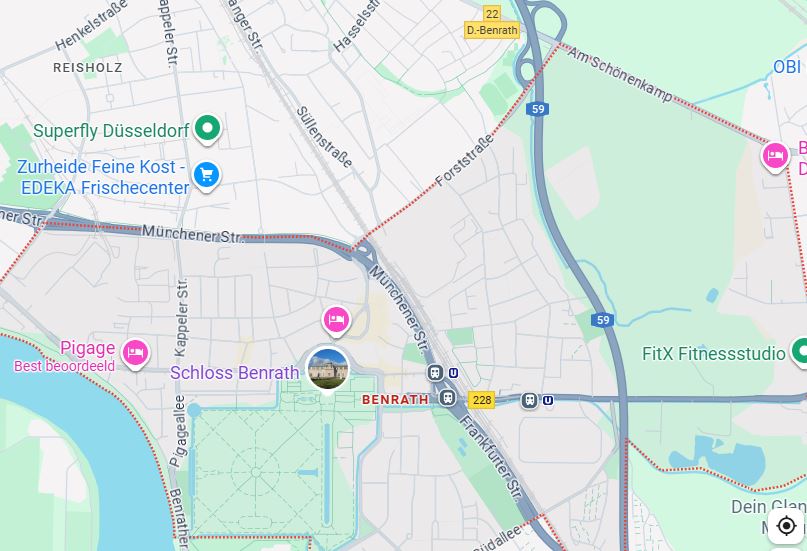
Accordingly he went, still in uniform, to Benrath hoping to cross the Rhine at Dusseldorf. At Benrath he registered with the police in his own name and stayed with an acquaintance. Two days later the place was occupied by the Americans and GISKES, who wanted to avoid capture, changed into plain clothes.
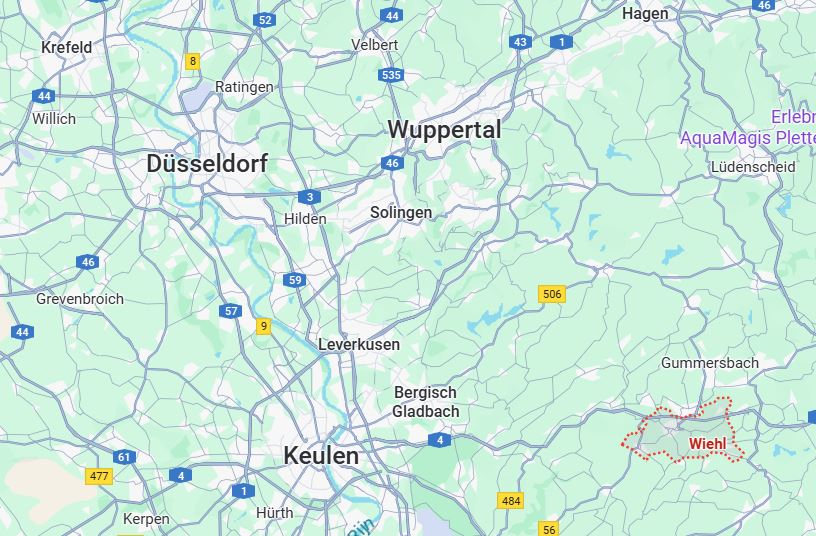
He stayed at Benrath until 21st (?) April and then, realising that it would be impossible to cross the Rhine, decided to go to the school in Wiehl; after the last of the trainees had dispersed at the end of March GISKES had installed in the scjool some of his friends and relations and he went to join them there, arriving on 23rd April. On 24th April GISKES sister-in-law attempted to get ration cards from the local mayor, mentioning that these were needed for her brother-in-law, Lt.Col. GISKES. The mayor refused to issue the ration cards and advised the woman that GISKES should surrender to the Americans. At 17:00 hrs on the same day a US C.i.C. Detachment in charge of an officer arrived, together with the two trainees CLAUDE and GILLES, and GISKES was arrested. A the time of his arrest he was in possession of an out-of-date German Passport and identity card, both made out in his real name.
GISKES was transferred to Camp 020 on 25-5-1945.
RELIABILITY OF INFORMATION.
GISKES is a German officer and was a very astute member of the Abwehr. He is intelligent and realises that the fact that he was taken in plain clothes, trying to avoid capture, has prejudiced his position considerably; this circimstance has probably rendered him more co-operative than he might otherwise have been. He also is aware that the information that he gives can be checked, with the result that he has been found to be a fruitful and accurate source.
He has been directly responsible for the arrest of a number of SOE agents in Holland, but interrogation of one of these agents now in the UK, bears out GISKES contention that he did his utmost to protect them from the ministartion of the Sipo.
GISKES, both in Holland and Belgium, was always playing for higher stakes then the suppression and arrest of espionage and Resistance Groups; his aims were to effect contact with Allied Intelligence Services in order to discover their plans and to carry out deception - in these two aims he was remarkably successful.
GISKES is now a middle-aged man with no prospects in a chaotic Germany; it is thought unlikely that he has, or knows of, any long-term plans for the rehablitation of the Abwehr, but he might, if released gravitate towards such a movement if it existed now, or in the future.
GISKES, although strongly anti-nazi at whose hands he has to a certain extent suffered, is before everything a German officer, and as such, could be a danger in the future if he were to come under the influenvce of brother officers working for the resurrection of a pre-Nazi Germany.
In the winter of 1943/1944 the situation in France and Belgium and, to a certain extent, Holland had deterioriated and it became obvious to ABwehr Amt. III that an intensification of effort would be necessary as it was known:
a. That the organisation and arming of Resistance from the UK was proceeding rapidly.
b. That clandestine transmitters were on the increase.
c. That enemy espionage had become more efficient and was producing good results.
On the other hand the Oberkommando West felt that, under the existing arrangements, it was unable to combat these threats to military security in view of:
a.
The lack of trained personnel.
b.
The increasing readiness of the civilian population to co-operate with the Allies - a readiness which, it was felt, would increase as the date of the Allied invasion of the Continent drew near.
c.
The mistrust felt by the RSHA of the Abwehr and of all officers who were not members of the NSDAP, which resulted in the RSHA continually trying to encroach on military security.
In view of this situation it was decided by Abwehr Amt. III that it was necessary to withdraw all III-F personnel from the various Referats and form FAK's and FAT's. directly under the Leitstelle III West and the relevant Army HQ, thus ensuring a very much more direct liaison with the military side and also strengthening the Abwehr's hand in its struggle against the RSHA.
FAK 307.
In January 1944 GISKES was appointed to the command of FAK 307 with FATs 362, 363, 364 and 365 under command. For the next three months GISKES was busy with the formation of his command and also carrying on his routine work in Holland during the transitional stage. He was constantly travelling between Driebergen where Referat III-F Niederlande was making ready to hand over and Brussels, Place de l'Industrie, where FAK 307 was forming. He had constant difficulties owing to a lack of personnel, as it was now necessary to finf officers and men who had military, as well as Abwehr, experience - this last was a matter of some importance as it was essential to make a good impression on the staffs of the formations to which his units were to be ultimately attached. In Addition, M/T, field telephones, WT equipment, etc were in short supply and GISKES had to use a considerable amount of ingenuity in getting the stores that were alloted to his units on the estanlishment. It had been made clear to him by Leitstelle III West that the units under his command might have to operate as ordinary military reconnaissance Trupps, working in uniform, thus making it necessary to train them for these duties. (On several occasions between September 1944 and April 1945 normal 1(a) reconnaissances were made by the Trupps for identification purposes).
Finally however preparations were so advanced that he could open in Brussels and close his HQ in Driebergen (A villa owned by Jewish people!) and in early March the new structure came into operation, although none of the units ever received the personnel and equipment laid down on the establishment.
GISKES FUNCTIONS.
The area alloted to FAK 307 and units under commant streched from the south bank of the Ems to the mouth of the Seine, comprising Holland, Belgium and the French departments of the Nord and Pas de Calais. GISKES was responsible for the keeping the I(c) branches of the C.i.C. Wehrmacht Holland and the C.i.C. Belgium and North France informed of the III-F position in this area; in addition he was to a certain extent under the Leitstelle III West but GISKES says that, in practice. he was really subordinate to the I(c) branches of the relevant Army HQ's.
GISKES states that from March onwards he practically ceased to be a technical Abwehr officer, his duties consisting of administering his unit and attending endless staff conferences in the capacity of a C.E. expert. (His duties appear to have approximated to those of a G.S.O.2.I(b) at an Army HQ with units under command.
ARMY's ATTITUDE TOWARDS RESISTANCE.
GISKES found that the static HQ in Holland and Belgium were completely unaware of the potential dangers of Resistance in the event of an invasion. The I(c) staffs consisted chiefly of elderly reserve officers who could not conceive of a war in terms of Resistance behind their own lines and regarded GISKES as an alarmist whose ideas would only cause extra work. GISKES himself was convinced of the very real danger.
A a leter period however, after September 1944, when GISKES was working with Heeresgruppe I(c) he found that the regular officers at this HQ were very much under the influence of the successes achieved by Resistance in France and Belgium - so much so in fact, that they tended to exaggerate the potential danger of foreign workers and POWs in Germany and were continually asking for investigation of the wildest rumours about Resistance groups. GISKES himself now thinks that the Resistance movements in France and Belgium played a large part in the defeat of the German Armies in the West but that there is no reason to believe that organised resistance existed behind the lines in Germany, at least not in the sector Heeresgruppe B. There may have been locally formed groups which however achieved nothing of importance.
FAK ACTIVITIES.
Accounts of cases of interest in the period between March 1944 until the evacuation of Brussels on 2nd September are given in the HUNTEMANN and "NORDPOL" reports - DACIER, LAMITER, FAUCONNIER in the former, LINDEMANS in the latter.
HEERESGRUPPE B.
From 3rd September, the date of the withdrawl from Brussles, until the liquidation of the Ruhr pocket in the first half of April 1945 an almost complete confusion reigned in the HEERESGRUPPE B sector and GISKES states that from 3rd September onwards it was impossible to carry out any order with anu prospect of success. He gives the following reasons for the chaos:
a.
The total breakdown of communications. All line communications were useless and he was commelled to depend on WT for communications with the Leitstelle and the FATs under command. WT spare parts were practically non-existent and petrol for the generators could only be obtained in the black market, e.g. exchaging rations or cigaettes for petrol. He was often out of WT contact for weeks at a time. D/Rs could only be used sparingly owing to the lack of petrol and could only move at night. The m/cs and cars suffered very severely on the icy roads during the winter and replacements were in most cases unobtainable.
b.
Replacements from normal Army sources of all equipment were lacking and it was often necessary to send men direct to the factories in Germany for stores. The only men available for such duties wre office clerks and often a third of the personnel was absent on such errands or acting as D/Rs; this naturally resulted in chaos in the office records. In some cases men sent away on such errands took the opportunity to disappear.
c.
The Leitstelle issued orders which were incapable of fulfilment, e.g. projects for dropping agents behind the Allied lines although no aeroplanes were available - the setting up of an agents school for WT operators without supplying equipment for training - the project to set up an informant system on the left bank of the Rhine in spite of the fact that the local Gauleiter intended to evcuate the entire civil population in this area.
LEITSTELLE III WEST.
From September 1944 to April 1945 the Leitstelle issued four directives:
1.
In September 1944 instructions were issued to FAKs to set up schools for the training of agents to be parachuted behind the Allied lines.
2.
In November 1944 instuctions were issued for the organisation of a stay-behind net on the left bank of the Rhine, the Claudius Net.
3.
In December/January instructions were issued for the organisation of a stay-behind net on the right bank of the Rine, the Carolus Net.
4.
In March instructions were received from the Leitstelle to withdrw all Soldbuchs and issue new ones. The Leitstelle believed that Abwehr personnel would be illtreated in the event of capture and to prevent this, new Soldbuchs were issued showing the holder to be a member of an ordinary military unit. As in some cases Abwehr personnel were carrying out reconnaissance patrols in uniform the danger of capture had increased. GISKES is insistent that this is the only reason for the issue of new Soldbuchs.
MISSIONS ORDERED BY I.c. HEEERESGRUPPE B.
After the evacuation of Brussels liaison between Heeresgruppe I.C. and GISKES became closer and towards the finish almost all orders to FAK 307 came from this source. The chief preoccupations of the Heeresgruppe I.c. were the organisation of stay-behind nets on both banks of the Rhine and the fear of organised resistance among Allied POWs and foreign workers. (An amount of how GISKES attempted to cope with these problems is given in the HUNTEMANN report, appendixure V.)
In addition four deception mission were given to GISKES by I.c. Heeresgruppe B, the details of which are as follows:
a.
At the end of November 1944 GISKES was given a list of locations of formation and unit headquarters in the area of München-Glagbach and Düren with instructions that this was to reach the Allies as coming from a first-class source. FAT 364 was entrusted with the infiltration. The package was given by an Abwehrgehilfe in plain clothes to a foreign worker who was attempting to regain Allied territory. This man's passage was arranged and he was successfully infiltrated with orders to hand over the package to the first Allied officer he met; he naturally was acting in good faith. Enclosed in the package was a covering letter stating that the information emanated from a group of German communists trench-digging close behind the German lines and asking that a wireless broadcast be made from Radio Luxemburg mentioning the words "Otto von Sachsen" to indicate safe reception of the package. This broadcast was made.
b.
In December 1944 and January 1945 messages were passed through the Allied lines by the same methods asking that a WT operator and set should be dropped at a place, the name of which is now forgotten by GISKES. It was imimated that an organised Communist group existed that needed direct WT contact with the Allies. These two attempts to establish contact with the Allied I.S. failed.
c.
In January 1945, a satchel was left behind at a place in the Eiffel, the name of which GISKES cannot remember, shortly before it was to be overrun by the US forces, The signals wallet contained papers purporting to be the prpperty of a staff officer of PZ.A.O.K.6 and contained among other items the staff tables for the move of this formation to Holland; in reality the formation was transferred to Hungary.
LOCATIONS OF FAK 307 AFTER LEAVING BRUSSELS.
3-9-1944 - 10-9-1944, Schloss Hillenraad bei Roermond.
10-9-1944 - 1-3-1945, Dersdorf bei Bonn.
1-3-1945 - 20-3-1945, Hausen.
20-3-1945 Hügenhausen near Lüdenscheid.
THE COLLAPSE AND GISKES ARREST.
On 25 April (?) GISKES received orders from Col. MICHAEL of I.c. Heeresgruppe B to collect the survivors of FAK 307 and FAT's 363 and 364 and to put himself under command of A.O.K. 5. From this date until the final collapse normal military duties were carried out - chiefly patrols in uniform, for the purpose of getting indentifications and documents.
On the 21 April (?) GISKES decided that the situation was hopeless and decided to assemble what remained of his command at a spot 12 kms north of Lüdenscheid with the idea of dispersing them to avoid their being taken prisoner. From this palce the party retired to Wupperthal were GISKES went to see MICHAEL who told him that all was over and that it was a case of sauve qui peut. MICHAEL formally relieved GISKES of all further military duties. GISKES went back to his party which was then at Leichlingen, 20 km south of Dusseldorf and explained the situation. On arrival he found that some of the party had already disappeared whilst others, like many German soldiers at that time, had procured civilian clothes and had found enployment on the land. GISKES himself decided to set out for his home at Schäphuysen. Kreis Moers, Rheinland, which was not far distant.
Accordingly he went, still in uniform, to Benrath hoping to cross the Rhine at Dusseldorf. At Benrath he registered with the police in his own name and stayed with an acquaintance. Two days later the place was occupied by the Americans and GISKES, who wanted to avoid capture, changed into plain clothes.
He stayed at Benrath until 21st (?) April and then, realising that it would be impossible to cross the Rhine, decided to go to the school in Wiehl; after the last of the trainees had dispersed at the end of March GISKES had installed in the scjool some of his friends and relations and he went to join them there, arriving on 23rd April. On 24th April GISKES sister-in-law attempted to get ration cards from the local mayor, mentioning that these were needed for her brother-in-law, Lt.Col. GISKES. The mayor refused to issue the ration cards and advised the woman that GISKES should surrender to the Americans. At 17:00 hrs on the same day a US C.i.C. Detachment in charge of an officer arrived, together with the two trainees CLAUDE and GILLES, and GISKES was arrested. A the time of his arrest he was in possession of an out-of-date German Passport and identity card, both made out in his real name.
GISKES was transferred to Camp 020 on 25-5-1945.
RELIABILITY OF INFORMATION.
GISKES is a German officer and was a very astute member of the Abwehr. He is intelligent and realises that the fact that he was taken in plain clothes, trying to avoid capture, has prejudiced his position considerably; this circimstance has probably rendered him more co-operative than he might otherwise have been. He also is aware that the information that he gives can be checked, with the result that he has been found to be a fruitful and accurate source.
He has been directly responsible for the arrest of a number of SOE agents in Holland, but interrogation of one of these agents now in the UK, bears out GISKES contention that he did his utmost to protect them from the ministartion of the Sipo.
GISKES, both in Holland and Belgium, was always playing for higher stakes then the suppression and arrest of espionage and Resistance Groups; his aims were to effect contact with Allied Intelligence Services in order to discover their plans and to carry out deception - in these two aims he was remarkably successful.
GISKES is now a middle-aged man with no prospects in a chaotic Germany; it is thought unlikely that he has, or knows of, any long-term plans for the rehablitation of the Abwehr, but he might, if released gravitate towards such a movement if it existed now, or in the future.
GISKES, although strongly anti-nazi at whose hands he has to a certain extent suffered, is before everything a German officer, and as such, could be a danger in the future if he were to come under the influenvce of brother officers working for the resurrection of a pre-Nazi Germany.








weggum.com